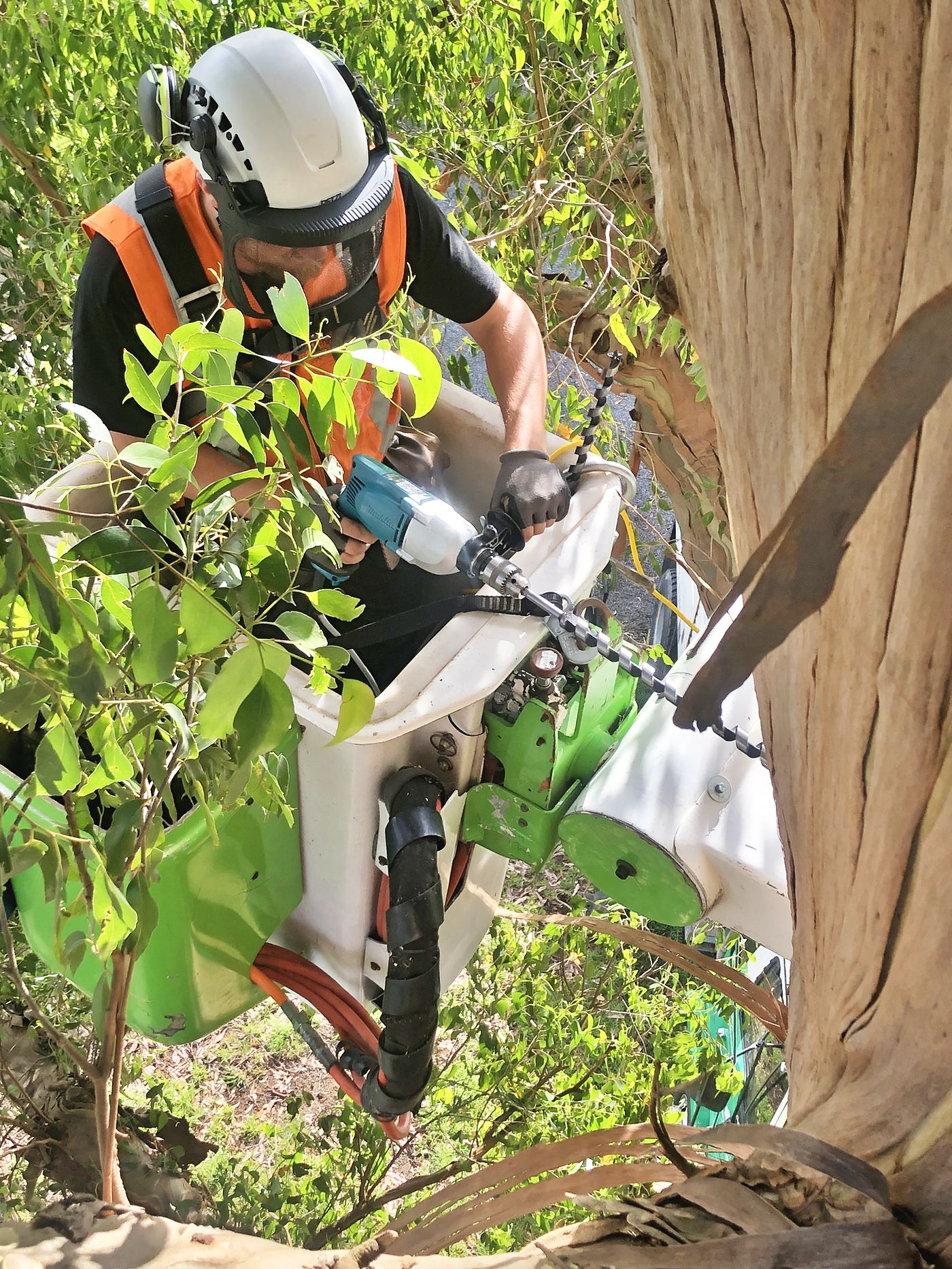
Tree bracing
A structural weakness isn't automatically a death sentence. Bracing can buy a valuable tree decades — where the assessment says it's warranted.
Support systems
When bracing is the answer.
Trees fail at predictable places. A co-dominant stem with included bark, a heavy horizontal limb over a driveway, an old wound that has hollowed — these are the classic candidates for a support system rather than removal.
The work always starts with assessment. Bracing a tree that should come out is dangerous, and bracing one that doesn't need it wastes your money. A qualified arborist inspects the defect, judges the likelihood and consequence of failure, and recommends accordingly.
Dynamic cabling — flexible synthetic systems installed high in the canopy that allow natural movement while limiting the extremes. Preferred for most living trees, as movement keeps the wood strengthening.
Static cabling — steel systems where a defect needs firm restraint.
Bracing rods — through-bolts across a split or weak union, usually alongside cabling.
Propping — ground-bearing support for heavy low limbs, common on old, spreading specimens.
Bracing is not fit-and-forget. Systems need periodic inspection, and synthetic cables have a service life. We record what was installed and when it should next be checked.
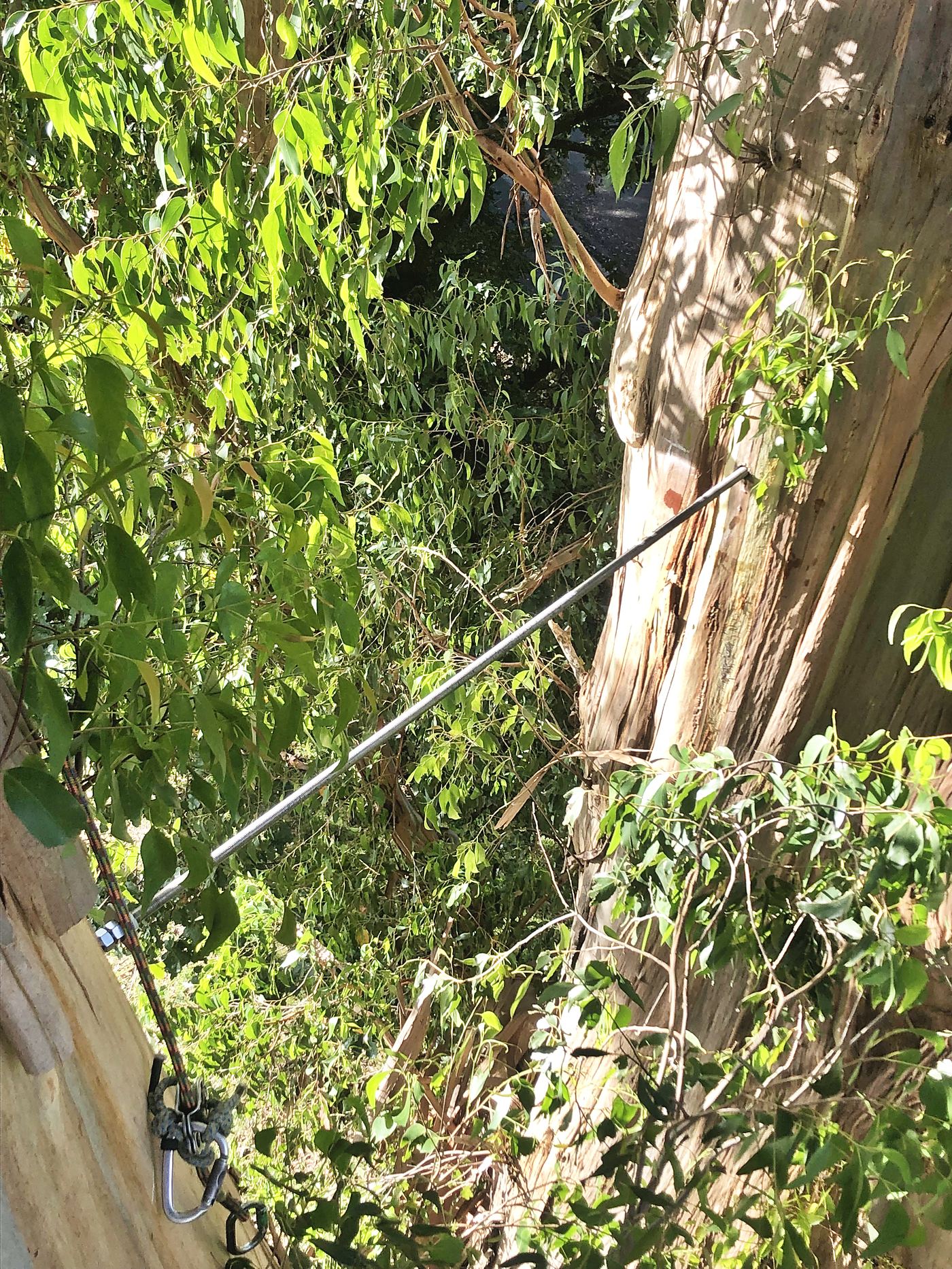
Cabling
High in the canopy, and sized to the load.
A cable goes in roughly two thirds of the way up the stems it joins — high enough to have leverage on the union below, low enough that it is not relying on the thinnest wood. Put it at the wrong height and the system either does nothing or moves the stress somewhere new.
Dynamic systems are the default on a living tree. They let the stems move, because movement is what makes a tree lay down strengthening wood. A rigid cable stops that, and the tree slowly gets weaker underneath it.
Rods and hardware
Where a union has already split.
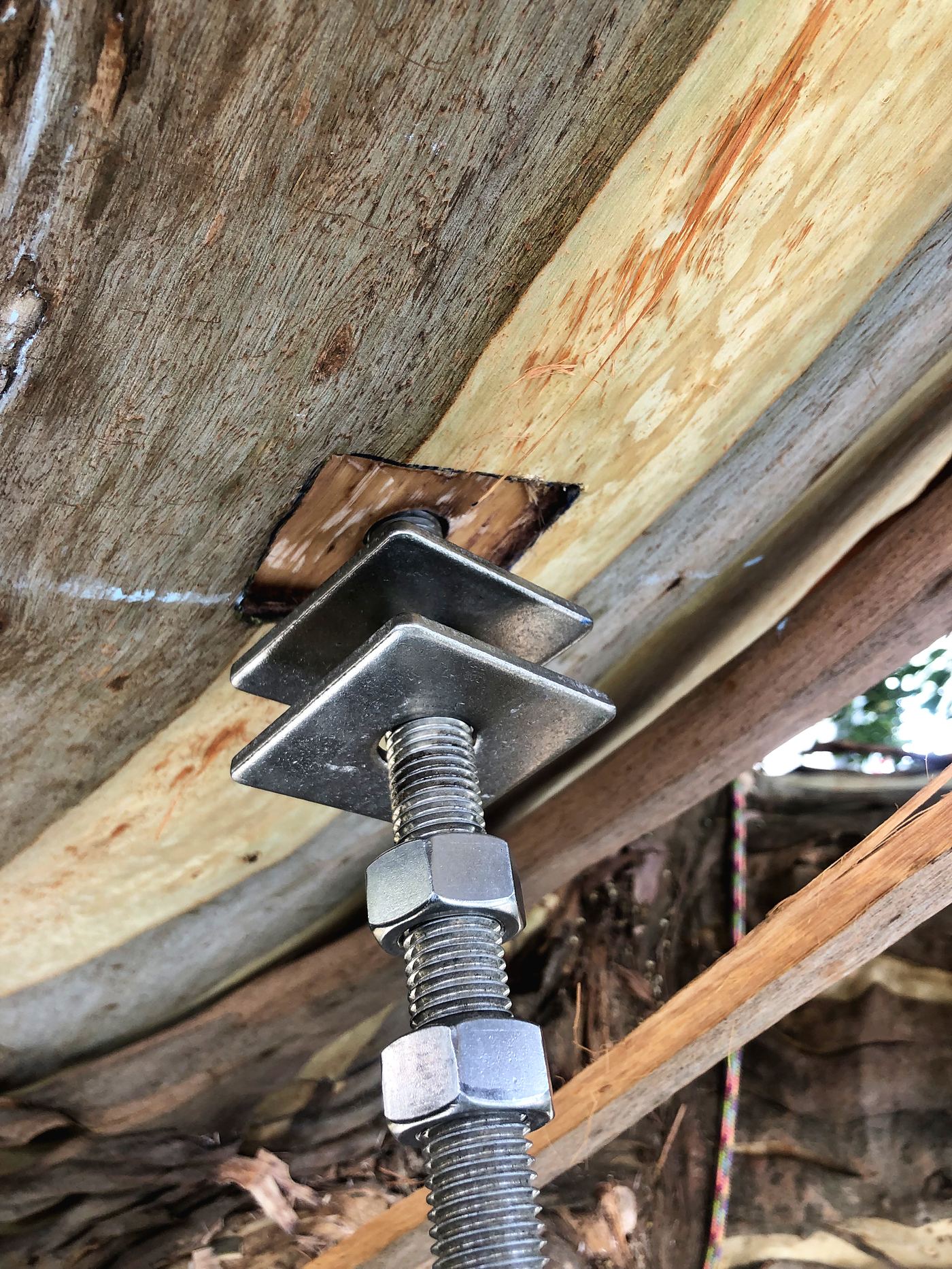
A cable limits movement. It will not pull a split union back together, and it will not hold one that has already failed. That is what bracing rods are for — a threaded rod through the defect, plated and tightened so the two halves work as one piece again.
Every rod is a wound, so they go in only where the assessment calls for one, drilled clean and in as few places as the job needs. Stainless throughout, because the hardware has to outlast the inspection cycle rather than the other way round.
Common Questions
Frequently asked
How long does a bracing system last?
Synthetic dynamic cables typically carry a manufacturer service life of around eight to ten years, subject to inspection. Steel systems last longer but need checking for the tree growing around the hardware.
Will bracing definitely save the tree?
No system removes risk entirely — it reduces the likelihood of a specific failure. Where the defect is severe, we'll say plainly that removal is the safer recommendation.
Does bracing damage the tree?
Properly installed, no. Modern dynamic systems are non-invasive, using cambium-saver slings rather than bolts through living wood wherever possible.